Barra de Santiago, Ahuachapán7 min read
Barra de Santiago: the sandbar with an estuary behind it
A five-kilometre spit in Ahuachapán, with the open Pacific on one side and the largest mangrove in western El Salvador on the other.
- Best time to go
- Dry season for the road, and dawn for the estuary — the mangrove trip is worth setting an alarm for. Turtle season runs through the second half of the year.
- Getting there
- About two hours from San Salvador: the Litoral west past Acajutla, then the turnoff south through the cane. The last stretch narrows; a normal car is fine in the dry season.
- Cost
- Free to be on the beach. A panga through the estuary is negotiated with local boatmen — agree the price and the route before you get in.
- How long
- Overnight, not a day trip
Don't miss
- A five-kilometre sandbar with the Pacific on one side and the estuary on the other
- The largest surviving mangrove in western El Salvador — a Ramsar site since 2014
- Isla El Cajete: thirteen unexcavated mounds on an island in the swamp
- Four species of nesting sea turtle, including the critically endangered hawksbill
- Caiman and American crocodile in the estuary channels
El Salvador's coast is mostly one thing: a straight, hard-breaking shoreline with the road running along behind it. Barra de Santiago is the exception. Here the land stops being a line and becomes a system — a five-kilometre spit of sand with the open Pacific on one side and 11,519 hectares of mangrove estuary on the other.
Everything that makes the place worth a night is a consequence of that shape.
What the sandbar actually is
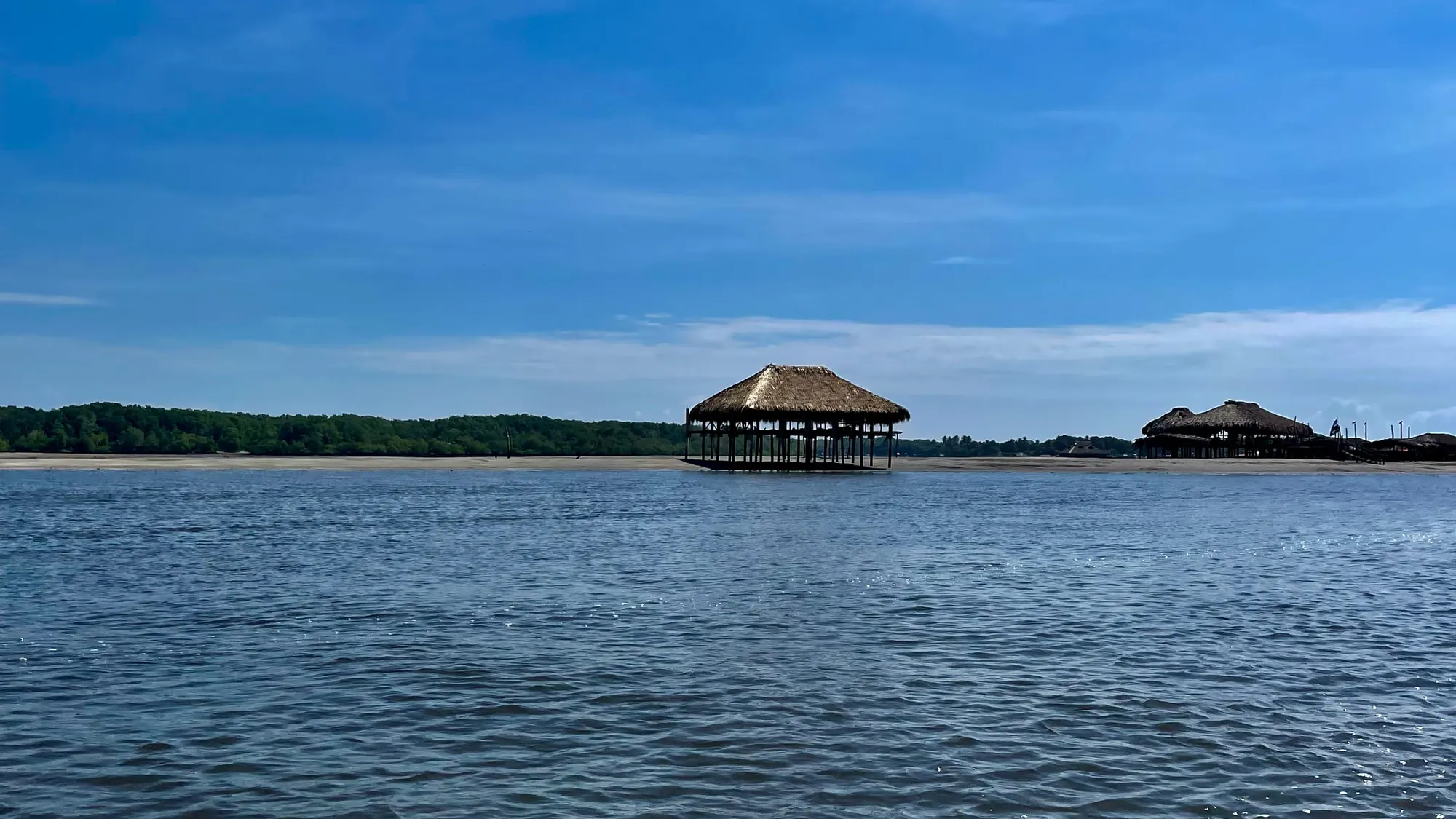
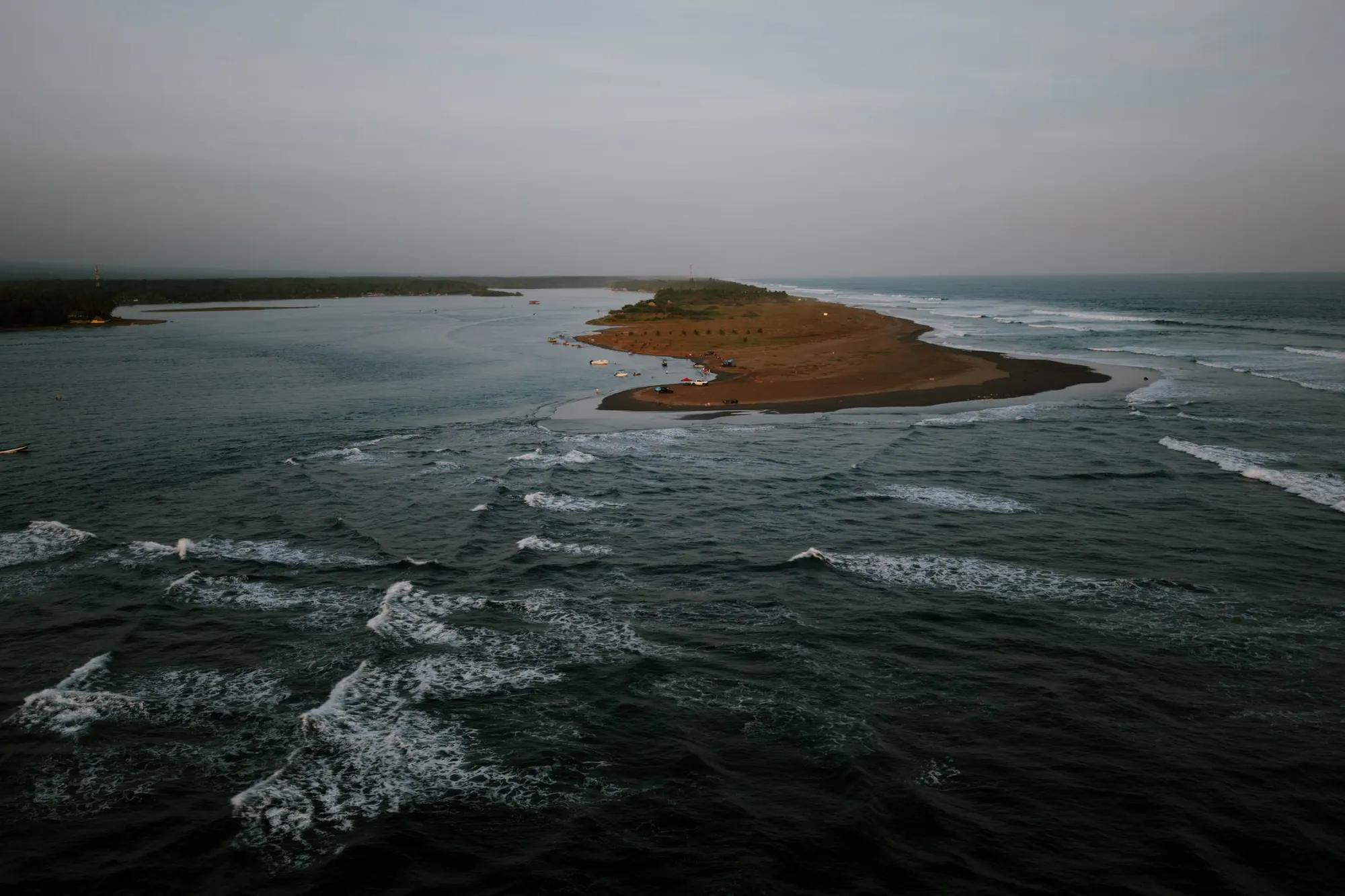
The barra is a spit — a long finger of sand thrown up parallel to the coast, closing off the water behind it. Two mouths break through it: bocana El Zapote at the eastern end and bocana El Zaite at the western. Between them sits the estuary, and behind the estuary the mangrove.
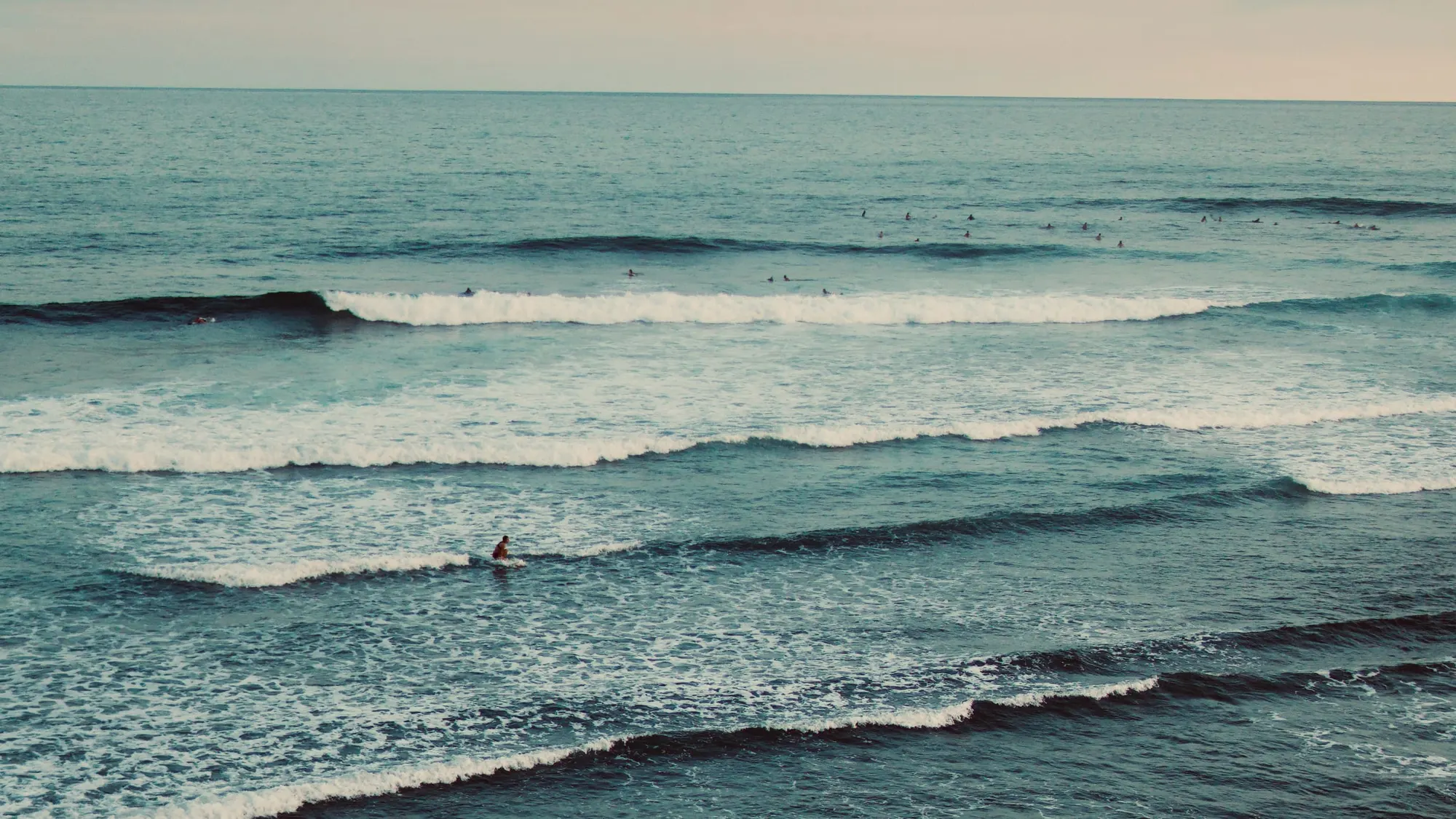
Stand on the tip at the eastern bocana and you can see the whole arrangement at once. Ocean swell wraps around the point and unloads on the bar; twenty metres behind you the estuary is flat enough to see cloud reflected in it. Pangas are pulled up on the calm side because that is the only side you would ever leave a boat.
Why it is protected
The Complejo Barra de Santiago was declared a Ramsar wetland of international importance on 23 July 2014, the seventh in El Salvador. It spans the departments of Ahuachapán and Sonsonate, taking in parts of San Francisco Menéndez, Jujutla and Acajutla, and it holds the largest remaining stretch of mangrove in the west of the country.
That is not just a botanical statistic. Mangrove is the nursery for most of what gets caught along this coast, and it is the reason the estuary supports what it does: spectacled caiman and American crocodile in the channels, and four species of sea turtle — hawksbill, leatherback, olive ridley and green — nesting on the ocean side.
The hawksbill matters more than the list suggests. It is critically endangered globally, and this stretch of the eastern Pacific is one of the few places where it still nests in any number.
The estuary trip
The reason to come is the boat. A panga through the mangrove channels at first light is the single best thing to do in this part of El Salvador — the water is glass, the canopy closes overhead, and the birdlife is doing its loudest work of the day.
Ask to be taken to Isla El Cajete. It is a mangrove island in the estuary, and it carries the remains of a ceremonial centre — roughly thirteen mounds and structures, dated to the early Postclassic. Nothing is reconstructed and nothing is signposted. You are looking at low grassy humps in the trees, and the interest is entirely in knowing that people built here, on an island in a swamp, eight hundred years ago.
Boatmen are local and arrangements are informal. Agree the price and the route before you get in, the same as anywhere.
Turtles
There is a hatchery operation on the bar, run with the community, buying and protecting nests that would otherwise be taken. Season runs broadly through the second half of the year and peaks with the rains.
If a release is happening while you are there, go. If it is not, do not pay anyone to dig up a nest for your benefit — that is the whole problem the hatchery exists to solve.
What it is like to actually be there
Small. The village is a working fishing settlement, not a resort strip: a handful of places to stay, a few comedores, sand roads. The beach is dark, steep and shelves fast, and the surf is a proper beach break rather than anything gentle — swimming is for the estuary side or for people who know what a rip looks like.
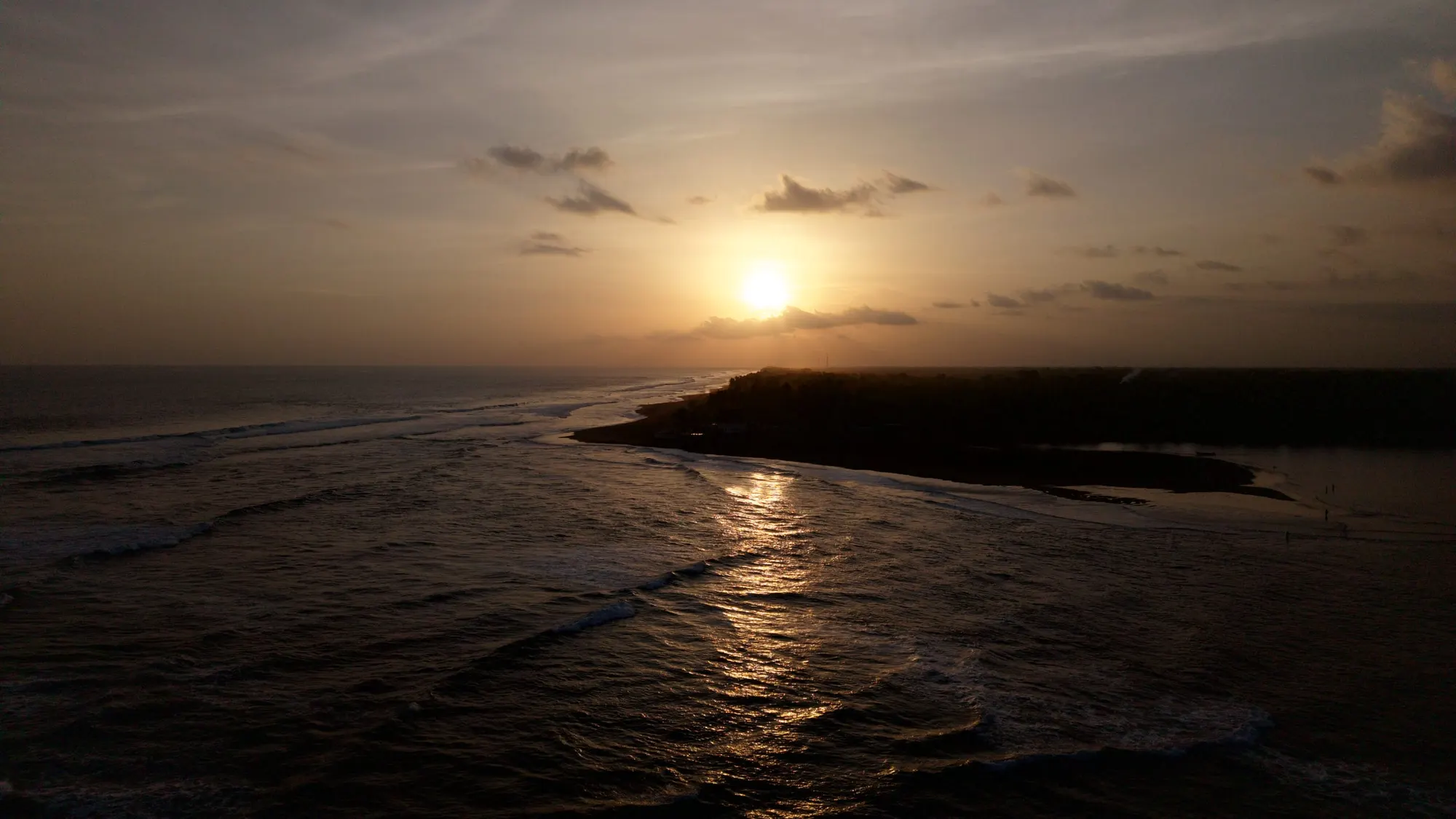
Sunset is the reliable spectacle, because the spit runs east–west and the ocean takes the sun end-on down the length of the beach. There is no bad night for it.
Practical
It is about two hours from San Salvador, most of it easy: the Litoral west past Acajutla, then the turnoff south through the cane and into the village. The last stretch narrows. A normal car is fine in the dry season.
Come with cash — card acceptance is thin — and with repellent, which is non-negotiable at dawn and dusk in a mangrove estuary. Stay the night if you can. The estuary at first light is the reason to be here, and it is not something you can drive out for at eight in the morning.
Our own Barra Vibes is on this stretch of coast, if you want somewhere on the sand to base the trip.
Find it
Barra de Santiago · Jujutla · Ahuachapán, El Salvador
- Coordinates
13.6896, -90.0010
- Nature
- Off the path
- Swimming