Estero de Jaltepeque, La Paz7 min read
Estero de Jaltepeque: the mangrove behind Costa del Sol
Everyone drives to the beach strip. The reason to make the trip is on the other side of the road, and you can hear it before you see it.
- Best time to go
- Early morning for the estuary — flattest water, most birds, best light. Dry season keeps the trip simple, but the mangrove is greenest in the rains.
- Getting there
- About 1h30 from San Salvador via the Autopista and the coastal road out along the peninsula. Paved the whole way; boats leave from La Herradura and jetties along the strip.
- Cost
- Free to be on the strip. A panga through the estuary is negotiated on the spot — agree the price and whether it includes the bocana and the mangrove channels.
- How long
- Half a day, or overnight on the strip
Don't miss
- The crackle under the mangrove — thousands of snapping shrimp, not the water
- Red mangrove channels you can cut the engine in
- Curileros digging conchas negras out of the mud by hand at low tide
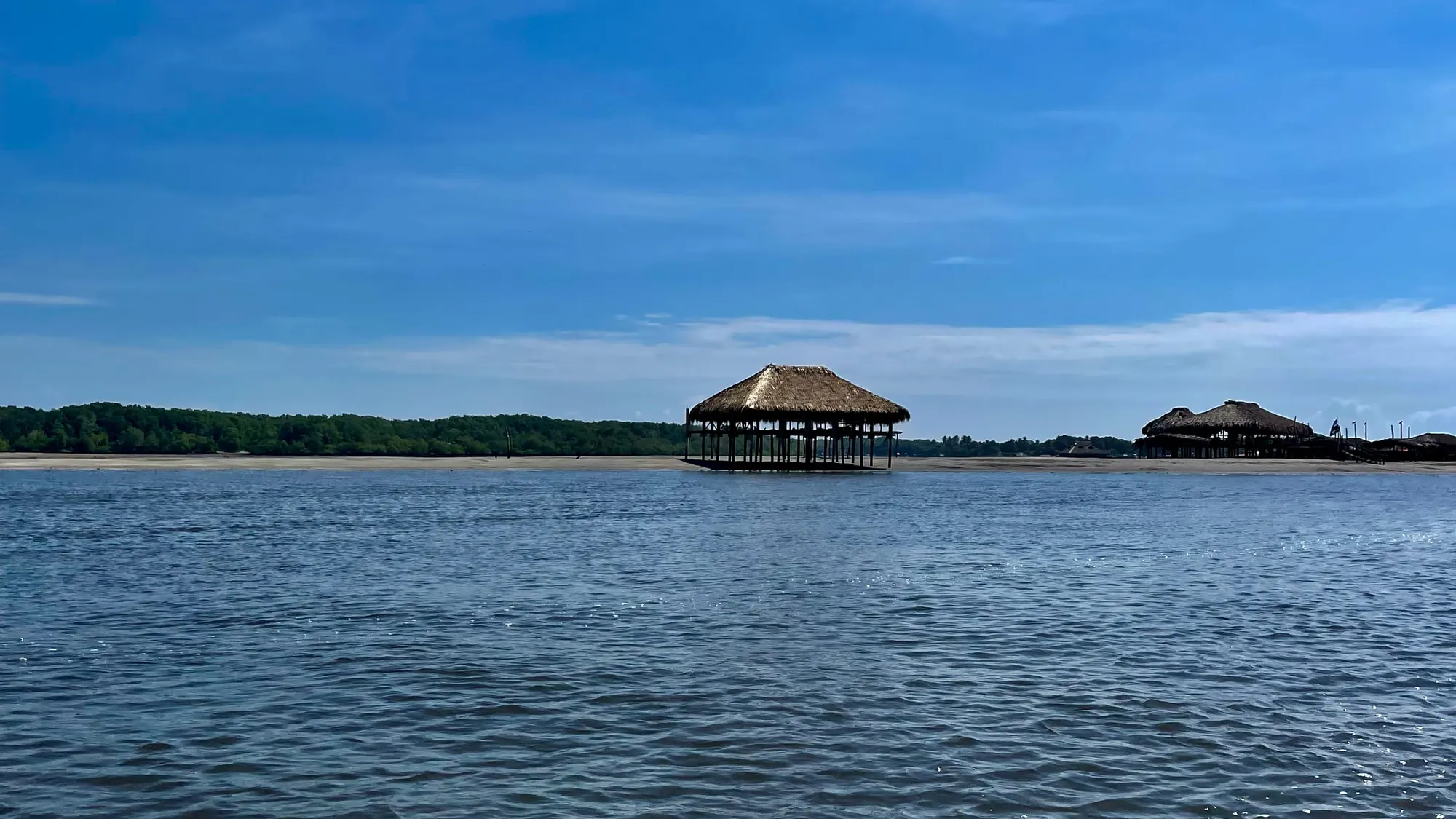
- Thatched palapas on stilts out on the sandbar at the bocana
Costa del Sol is the beach strip everyone knows: a long flat spit in La Paz lined with beach houses, an hour and a half from San Salvador, the place the capital goes for a weekend.
The strip is fine. The reason to make the trip is on the other side of it.
Turn around
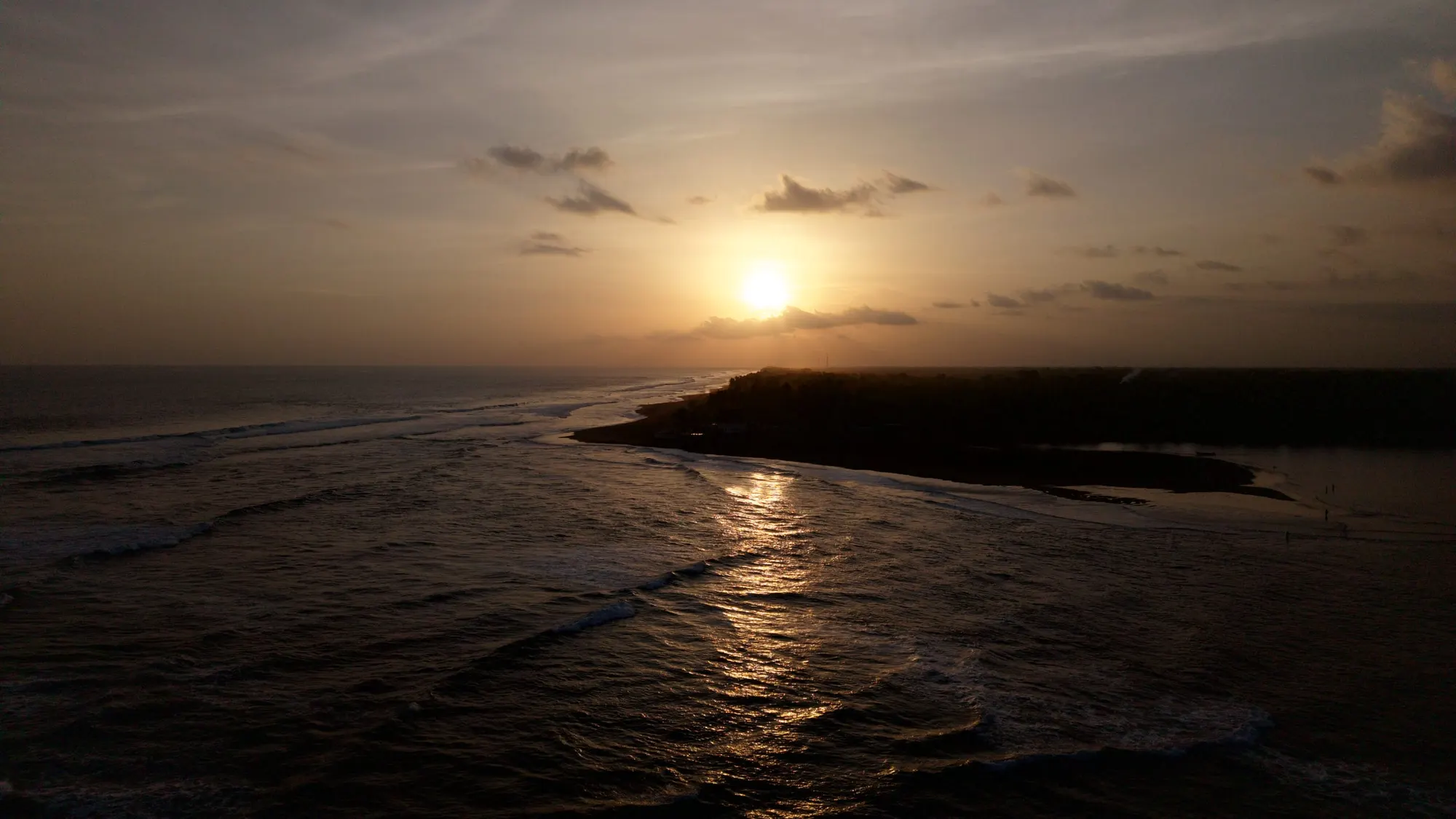
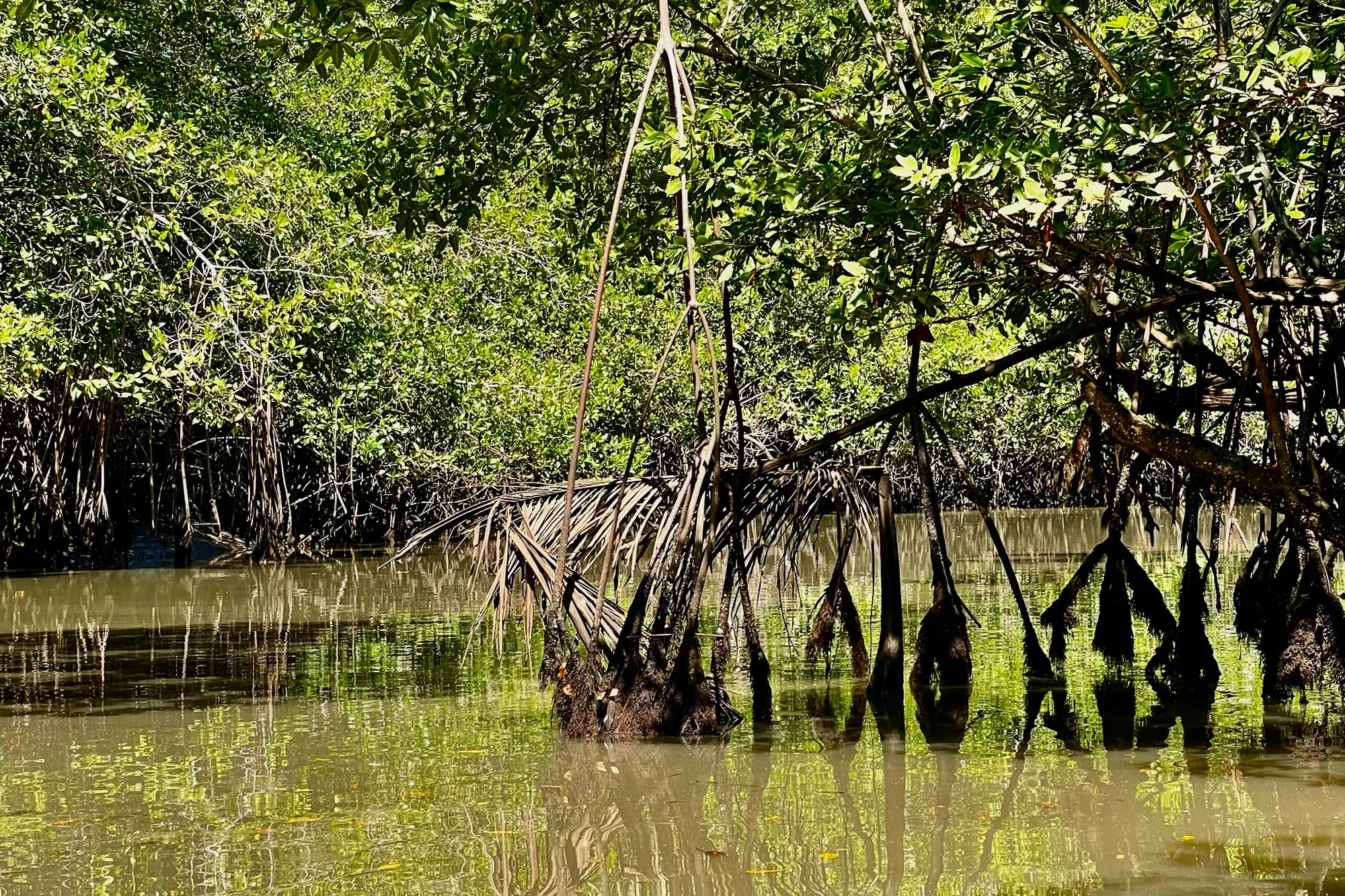
Behind the houses, on the landward side of the road, is the Estero de Jaltepeque — a large mangrove estuary running the length of the peninsula, fed by the Río Lempa and open to the Pacific at the bocana.
It is a different world from the surf side. The water is flat and olive-green, the channels run back into red mangrove, and once the outboard is cut it is quiet enough to hear the place working. Boatmen operate out of La Herradura and from jetties along the strip; a trip is negotiated on the spot.
The sound
Cut the engine anywhere near the mangrove and you will hear it: a continuous, dry crackling, like frying bacon or rain on a tin roof, coming from everywhere and nowhere. It is the first thing visitors ask about.
It is not the water, and it is not the shellfish. It is snapping shrimp — Alpheus and their relatives, a couple of centimetres long, living in the mud and among the roots in enormous numbers.
One claw is oversized, up to half the animal's body length, and it does not work by pinching. The shrimp cocks it and releases it so fast that the water behind it cannot keep up: the pressure drops, a vapour bubble forms, and the collapse of that bubble is what makes the noise. It is loud out of all proportion to the animal — snapping shrimp colonies are among the loudest sound sources in the ocean, measured in the range of 183 to 210 decibels at the source.
They use it to stun prey and to argue with each other. What you are hearing is a few thousand of them doing that at once, all day, and it is one of the reliable signs of a mangrove system that is still working — reef and mangrove larvae actually navigate toward that sound when choosing where to settle.
The black shells
The other thing everyone asks about is the concha negra — Anadara tuberculosa, the black ark clam, and one of the estuary's real economies.
They live buried in the soft mud among red mangrove roots, and they are collected by hand: curileros go in at low tide, reach into the mud up to the shoulder, and feel for them. It is hard, muddy, poorly paid work, and it supports families all along this coast and down through Panama and Ecuador.
Worth knowing, because the folklore around them is confident and wrong: they are filter feeders. They sit in the mud drawing water across their gills and taking out phytoplankton and suspended organic matter. They do not hunt, they do not chase mosquito larvae, and they make no sound at all. What they do need is clean water, which is exactly why they are a decent indicator of estuary health — and why mangrove clearance takes the fishery with it.
You will be offered them in a coctel, raw with lime, onion and salsa. That is the traditional preparation and it is very good. It is also raw shellfish from an estuary, so use the same judgement you would anywhere.
The bocana and the sandbar
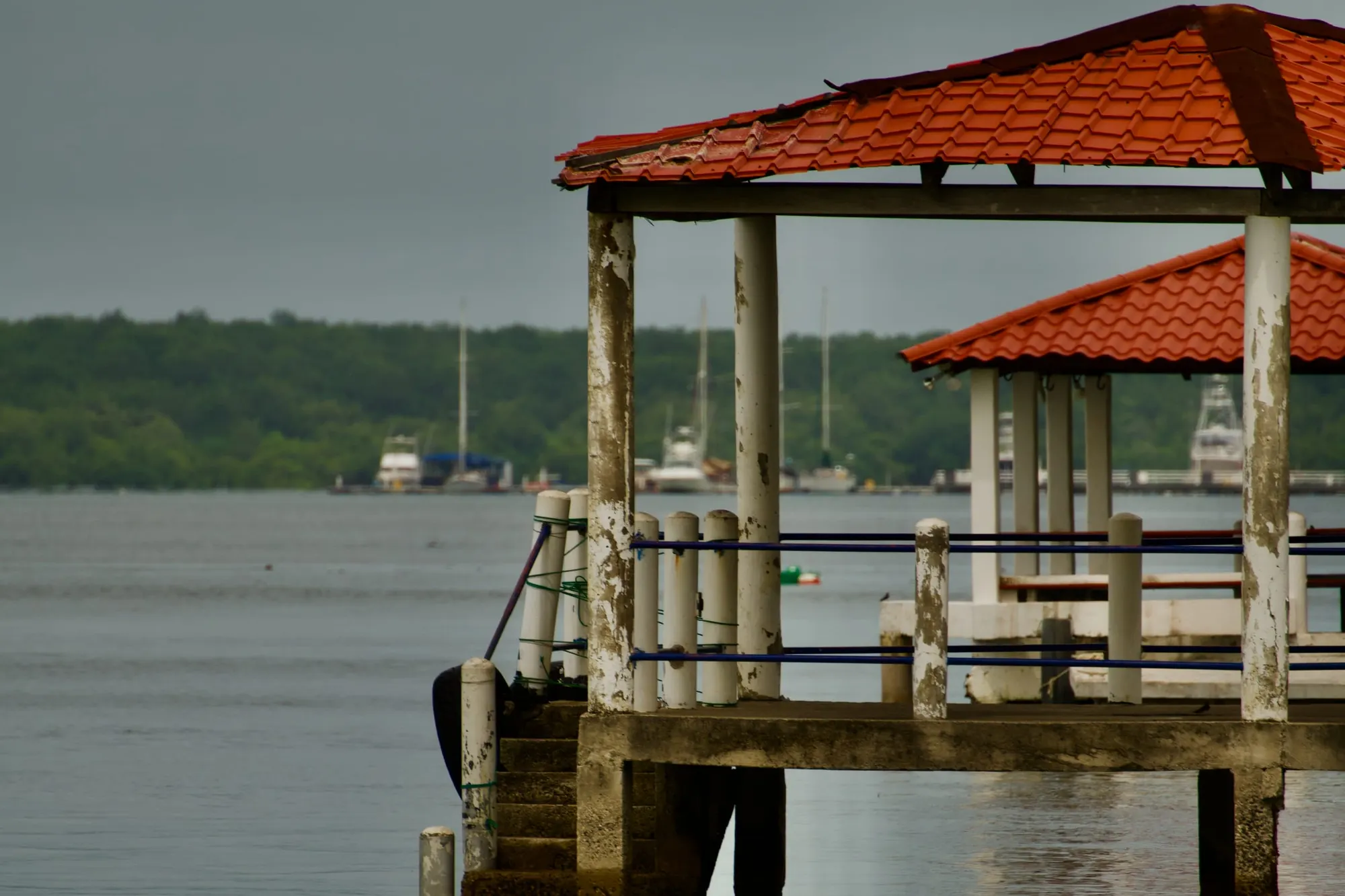
Where the estuary meets the sea there is a bocana, and around it, standing on the sand at the water's edge, are big thatched palapas on stilts — the ones you see on the way in. They are restaurants and shade, and they are the natural end point of a boat trip.
The estuary side is also where boats live, because it is the side that does not break. Pangas and small sailing boats are moored along the mangrove shore where the water is flat all day.
Practical
About 1h30 from San Salvador via the Autopista and the coastal road out along the peninsula. The road down the strip is paved the whole way.
Go early for the estuary — the water is flattest, the birds are most active, and the light is better. Agree the boat price and the route before you get in; ask whether it includes the bocana and the mangrove channels, because a short version exists.
Bring cash, repellent — it is a mangrove estuary, this is not optional at dawn and dusk — and sun protection, since a panga has no shade.
Find it
Estero de Jaltepeque · San Luis La Herradura · La Paz, El Salvador
- Coordinates
13.3388, -88.9952
- Nature
- Off the path
- Food